

Renogy 320W N-Type Monocrystalline Solar Panel 1 / 2
Renogy

Renogy 320W N-Type Monocrystalline Solar Panel - 2 Panels Renogy 320W N-Type Monocrystalline Solar Panel

SKU: RSP320DC-BKx2-G1-US

Brand Renogy In Stock
$599.99 In Stock
No sales tax collected at checkout where applicable.
5% off Save 5% on eligible items Copy this code and apply it at checkout when eligible. Code: GET5
Extra 5% offUse GET5 at checkout

Applies to eligible items.

Estimated delivery Calculating current delivery window…
Secure checkoutProtected payment Free shippingView shipping policy Eligible returnsView return policy Authorized dealerRenogy warranty
Free shippingAuthorized dealer

Will this run what you need?

Check your setup with our team.

Shipping & returnsDelivery details, return eligibility & fees

Shipping
Free shipping. Check the availability and delivery information above for your selected option.

Returns

Approval is required. The 30-day window covers eligible products that have not been used or installed, with their original packaging and supplied contents retained.

For non-defective returns, you pay return shipping and may incur restocking charges of up to 20%. Processing fees of 3–4% are not refundable. The full policy explains exceptions and how to request a return.

Secure checkout · Protected payment
Authorized dealer · Renogy warranty

No sales tax collected at checkout where applicable.

Need help choosing? Find the right setup for you. Talk it through with our team, or size your system with the Power Planner. Call 1-844-747-6767 Open Power Planner

Quantity

Your selection

Renogy 320W N-Type Monocrystalline Solar Panel

In Stock
Quantity$599.99 each
1

Start Compact. Explore Without Limits.

Each rigid N-Type panel is rated for 320W at standard test conditions, with 22.2% module efficiency and an 18-busbar design. Choose the 2-panel (640W) or 4-panel (1280W) pack for a compatible RV, cabin or other off-grid array.

Renogy 320W N-Type solar panel with 25 percent cell efficiency and 18 busbar highlights

Compact Power with Cleaner Wiring

Two 320W panels use less roof space and fewer connections than six 100W panels, helping create a cleaner installation in limited mounting areas.

Two Renogy 320W solar panels compared with six 100W panels on a roof
Renogy 320W N-Type panel real-world size comparison

Strong Output in High Heat

N-Type cells are shown maintaining stronger production in high-temperature environments than comparable P-Type PERC panels.

Renogy 320W N-Type solar panel high heat performance comparison

Ready for Every Mile and Every Season

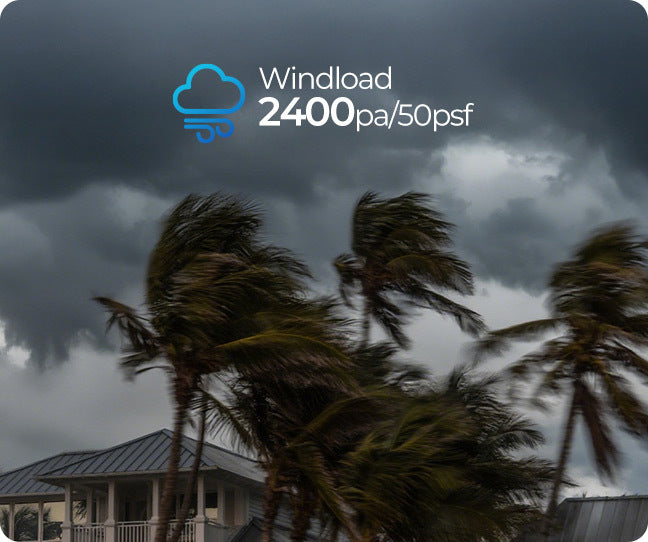
A rust-proof aluminum frame and weather-rated design support demanding travel and outdoor installations, including stated snow and wind load protection.
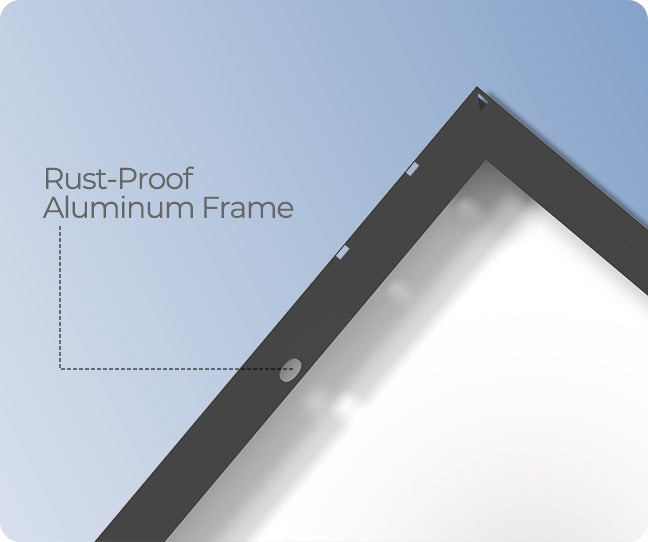

Renogy 320W panel rust-proof aluminum frame detailRenogy 320W panel 5400 Pa snow load ratingRenogy 320W panel 2400 Pa wind load rating

Flexible Mounting, Hassle-Free Setup

Pre-drilled mounting points support flat, tilted and pole-mount configurations, allowing the panel to adapt to different system layouts.

Renogy 320W solar panel pre-drilled holes and mounting configuration options

Scalable Power for Off-Grid Systems

Connect panels in series or parallel to expand a solar system for compatible off-grid applications such as mobile power and workshop energy needs.

Renogy 320W panel series configuration for a bus solar power systemRenogy 320W panel parallel configuration for a workshop solar power system

Versatile Power for Off-Grid Adventures

Use these rigid panels in a correctly sized RV, cabin or shed solar array. Check the charge controller’s voltage and current limits against each panel’s 43.82V open-circuit voltage and 8.92A short-circuit current before wiring panels in series or parallel.

Renogy 320W panels for RV solar powerRenogy 320W panels for mobile off-grid solar applicationsRenogy 320W panels for backyard solar power

What's included

The 2-panel option includes two 320W panels; the 4-panel option includes four 320W panels. Mounting hardware, charge controller and battery are separate system components.

Compare a related option

Compare nameplate output, open-circuit voltage, current and installation footprint.

Renogy 590W N-Type Bifacial Monocrystalline Solar Panel

Renogy 320W N-Type Monocrystalline Solar Panel - 2 Panels
Package Includes
1x Renogy 320W N-Type Monocrystalline Solar Panel - 2 Panels
Includes the selected item based on the current package option.
2pcs 320W N-Type Monocrystalline Solar Panel
Selected variant SKU RSP320DC-BKx2-G1-US
Bundle Options
2pcs 320W N-Type Monocrystalline Solar Panel x 1
2pcs 320W N-Type Monocrystalline Solar Panel x 2
2pcs 320W N-Type Monocrystalline Solar Panel x 3
2pcs 320W N-Type Monocrystalline Solar Panel x 4
2pcs 320W N-Type Monocrystalline Solar Panel x 5
320W N-Type Solar Panel
Electrical Parameters
Max Power at STC 320W
Open Circuit Voltage 43.82V
Short Circuit Current 8.92A
Optimum Operating Voltage 37.85V
Optimum Operating Current 8.46A
Maximum System Voltage 1000VDC
Maximum Series Fuse Rating 20A
Module Efficiency 22.2%
Environmental Data
Operating Temperature -40°F~185°F / -40℃~85℃
Mechanical Specifications
Dimensions 1640 x 880 x 35 mm / 64.6 x 34.7 x 1.4 in
Weight 14.9kg / 32.9 lbs
Warranty
Warranty 10-Year Output Warranty & Material and Workmanship Warranty

Frequently Asked Questions

Clear answers to common questions about this product, setup, compatibility, and use.

What do I need to complete my off-grid solar power system ? A solar panel has to be connected a charge controller to regulate current, and a battery to store the electrical power. You will need adapter kit cables to wire the solar panel(s) and charge controller, and tray cables connecting the charge controller to a deep-cycle battery. What does off-grid and on-grid mean ? On-grid simply means solar power equipment (array or solar panel) is connected to the electrical grid, while off-grid refers to systems that are not connected to the grid and therefore store the generated power for later use. Off-grid systems are not affected by grid blackouts. Why is my solar panel under producing ? Solar panel performance may be hindered for a number of reasons. Most commonly environmental conditions such as indirect sunlight, temperature rise, cloudy sky, and dirt and stain build up on the top glass will cause a reduced power output. How should I connect solar panels in my electrical circuit (series vs parallel) Solar panels can be connected in series or in parallel to meet your electrical circuit size and power demand. Connecting solar panels in series will have the effect of adding up their operating voltage output, while system current output will be the same as that for one panel. While, connecting solar panels in parallel will have a different effect; individual panels operating current output will add up to be the system output current, while system output voltage will be the same as the output voltage of one solar panel. To meet the optimum power output and system rating for your power system, you can use both parallel and series connections. How many solar panels do I need ? The best way to gauge how many solar panels you need, is to understand and define the power load needed from this system. Power is measured in Watts, and capacity is commonly measured in Watt-hours (multiplying power output in watts by the required number of hours of operation multiplied by a safety factor of 1.5-2). Therefore, it is wise to size your battery bank first based on the minimum required capacity, and accordingly decide how many panels or how much power input is needed. What is the meaning of 24V in the product title,Why is this value different from the voltage of the solar panel? When you open the product page, you will see a title like "xxx Watt 24 Volt Monocrystalline Solar Panel". The "24V" here does not refer to the voltage of this solar panel (VOC or VMP), but to the fact that one xxxW solar panel is suitable for 24V system (i.e. a 24V battery),no need for additional series and parallel connections.Therefore, these are two completely different values with different meanings.